
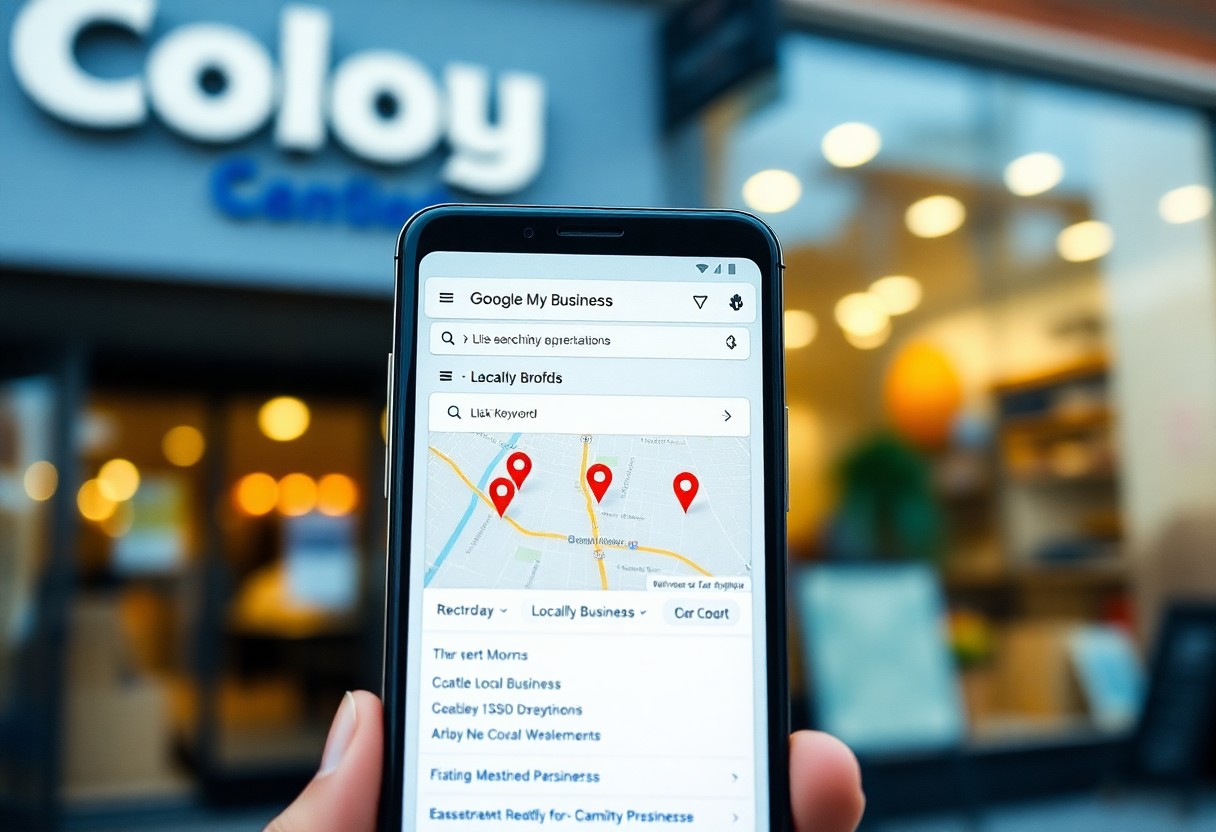
A single typo in your business address is costing real businesses real customers right now. Studies show that 68% of consumers stop trusting a business when they find inconsistent information about it online - and most of those businesses have no idea the problem even exists.
The culprit is something called NAP consistency. NAP stands for Name, Address, and Phone Number. It is the basic identity information your business shows to the world across Google, directories, social media, and review sites.
When that information matches everywhere, Google trusts you. When it does not, Google quietly pushes you down the rankings.
Think of it like a background check. Before Google recommends your business to someone searching nearby, it cross-checks your details across dozens of websites. If your address says "St." on one site and "Street" on another, or your phone number has a different format on Yelp than on your own website, Google sees a red flag. That red flag means fewer people find you - and businesses with consistent NAP data earn 23% more website clicks from Google than those without it.
This article walks you through exactly how to fix that. You will start by understanding why local search trust works the way it does and how small data errors translate directly into lost customers. From there, you will learn how to create a single master format for your business information and use it as your standard everywhere online.
You will also learn how to hunt down hidden errors scattered across the web, spot the most common mistakes business owners miss, and repair your digital footprint starting with the platforms that matter most. The article then covers software tools that automate the process, free Google resources that help you monitor your listings, and finally, a special type of website code called schema markup that speaks directly to Google in its own language.
By the end, you will see that getting found locally is not about luck or a big budget. It is about keeping three small pieces of information perfectly consistent - everywhere, all the time.
Connecting Online Data to Offline Customers
NAP consistency - your business Name, Address, and Phone Number - acts as a primary legitimacy signal that tells search engines your physical location is real and trustworthy.
Google does not simply take your word for it. Its crawler cross-references your business details against authoritative sources across the web, comparing your website, your Google Business Profile, directories, and social media profiles to see if the data matches.
When every source agrees, Google gains confidence that a real business operates at that address. When sources conflict, that confidence drops - and so do your rankings.
Why Search Engines Behave Like Fact-Checkers
Search engines work like journalists verifying a story. They check multiple independent sources before trusting any single claim. If your address reads "123 Main Street" on your website but "123 Main St." on Yelp, Google flags that as a potential mismatch.
Diluted search confidence leads directly to lower rankings in local results. Worse, inconsistent data prevents your business from appearing in the Google Maps Pack - the three highlighted local results that sit above all other search listings and capture the most clicks.
Even a small phone number format difference - like "(555) 123-4567" versus "555.123.4567" - can cause Google's data aggregators to treat them as two separate businesses entirely.
Missing that Maps Pack placement is a serious cost. Customers searching for a local service rarely scroll past those top three results, which means inconsistent data cuts you off from the most visible spot in local search.
The Offline Cost of Online Errors
Bad data does not just hurt rankings - it directly sends customers to the wrong place. A customer who calls a disconnected number or drives to an old address does not wait around; they move on to a competitor.
Research shows up to 68% of consumers stop using a business if its information is inconsistent online. That is not a ranking problem - that is lost revenue walking out the door.
Businesses that maintain uniform NAP data across all platforms see measurable gains in customer engagement. One report found 23% more website clicks from Google for businesses with consistent listings compared to those with scattered, conflicting data.
Data uniformity creates a direct bridge between what someone finds online and the real-world business they walk into. Search engines reward that bridge because it serves their users - and that reward shows up as higher rankings and more foot traffic.
Avoiding the 68% Customer Loss Trap
Wrong business information does not just annoy people - it drives them straight to your competitors. Studies show that 68% of consumers abandon a business when they find inconsistent listings online.
Picture a customer who searches for your shop on Google, finds a phone number, calls it, and gets a disconnected tone. That single moment destroys trust faster than any bad review ever could.
NAP consistency - keeping your Name, Address, and Phone Number identical across every online platform - is what prevents that moment from happening. Without it, your business bleeds customers silently, one failed connection at a time.
Outdated addresses create a different kind of damage. Someone drives across town, follows the directions Google gave them, and arrives at an empty building or a completely different shop. That wasted trip rarely ends with a second chance.
Foot traffic lost this way is foot traffic gone for good. Most people do not call to ask what happened - they just leave and find someone else.
Beyond frustration, there is a real financial cost to these missed connections. Every unanswered call from a wrong number, every abandoned visit from an old address, represents money that never reached your business.
Customer engagement - how often people click, call, or visit after finding you online - rises sharply when your data is accurate. One report found that businesses with consistent NAP data received 23% more website clicks from Google than businesses with errors in their listings.
Accurate data creates a smooth path from search to sale. A customer finds you, the phone number works, the address is correct, and they arrive. Each step in that journey depends on the one before it.
Break any link in that chain - a wrong area code, an old street name, a name variation - and the journey ends early. The customer stops, gets confused, and loses confidence in your business.
Consistency signals reliability. When your information matches across Google, Yelp, Facebook, and every directory, customers read that as a sign that your business is organised and trustworthy. When it does not match, the opposite message lands instead.
Avoiding this trap is not complicated. Audit your listings, fix the errors, and check again every few months. The 68% who walk away are not lost because of bad service - they are lost because of bad data.
Creating Your Master Canonical Format
Every update starts with one document. Before you touch a single directory or social profile, you need to write down your official, unchangeable business details in one place - your master canonical format, sometimes called a "Golden Record".
Canonical simply means "the official version." Every other listing you create or fix will copy from this document exactly, character by character.
Your Business Name: Use the Legal Version
Your business name on every listing must match your exact legal name - the one on your registration papers. If your company is registered as "Greenfield Repairs Ltd", that is what goes on every platform. Not "Greenfield Repairs", not "Greenfield Repairs Limited".
Choosing between "Ltd" and "Inc" is not a style choice - it is a legal fact. Use whichever suffix your registration states, and never swap between the two.
Do not stuff keywords into your business name. Writing "Greenfield Repairs - Best Plumber in Austin Ltd" breaks Google's guidelines and signals to search engines that something is off. Your name is your name, full stop.
Your Phone Number: Pick One and Stick to It
Your primary local number is the standard for your Golden Record. This means a real geographic number for your area - not a freephone number, not a department extension, not a tracking number you rotate between campaigns.
Even small format differences cause problems. Google's data systems can read "(555) 123-4567" and "555.123.4567" as two separate businesses. Pick one punctuation style and never change it.
Multi-Location Businesses Need Separate Records
Running more than one location? Each site needs its own Golden Record document. One master format for the whole brand does not work here - the address and phone number are different for each location, so each gets its own file.
Build the Document Now
Honestly, most beginners skip this step and pay for it later with hours of messy corrections. Write your Golden Record before doing anything else.
- Write your exact legal business name, including "Ltd", "Inc", or any other suffix
- Write your full address in one consistent format, deciding now on abbreviations like "Street" versus "St"
- Write your primary local phone number in one chosen format
- Save this document somewhere permanent and share it with anyone who manages your listings
Once this record exists, it becomes your single source of truth. Every platform you update in the next steps will copy from it exactly - which is precisely what the next section on USPS address formatting will help you get right.
Following USPS Address Formatting Rules
Only 10- or 12-point type meets the USPS address formatting standard - a rule most small business owners have never heard of, yet it directly affects how search engines read your location data. Your address is not just a mailing detail; it is a signal Google uses to confirm your business exists where you say it does.
USPS guidelines recommend uppercase letters, a simple font like Courier New or Times New Roman, and dark ink on a light background. Punctuation is mostly dropped - except for the hyphen in a ZIP+4 code, which looks like this: 30303-1234.
The Line-by-Line Address Sequence
Every address follows a specific order. Get this wrong and you create inconsistencies that confuse both mail carriers and search engines.
- Line 1 - Recipient Name - Write the name of the person or contact receiving mail at this address. For most businesses, this is optional but worth including for formal listings.
- Line 2 - Business Name - Place your exact legal business name here. No taglines, no extra keywords added.
- Line 3 - Delivery Address - Write the street number, street name, and any suite or apartment number here. For example: 456 OAK AVE SUITE 3B. Never drop the suite number - leaving it out creates a mismatch between your listing and your physical location.
- Line 4 - City, State, ZIP+4 - Use the two-letter state abbreviation in uppercase, followed by the ZIP+4 code. For example: ATLANTA GA 30303-1234.
- Line 5 - Country - Only needed for international addresses, written in uppercase.
Save your completed USPS-formatted address in a plain text document and copy-paste it everywhere - never retype it. Retyping is how "St" becomes "Street" by accident.
Abbreviations and How Google Handles Variations
Choosing between "Street" and St sounds trivial, but your whole NAP strategy depends on picking one and never switching. Google can normalise minor differences - it often reads "Fifth Avenue" and "5th Ave" as the same - but relying on that is a bad habit.
Honestly, standardising on USPS abbreviations is the smarter move. Use "ST" for Street, "AVE" for Avenue, "BLVD" for Boulevard. These are official thoroughfare abbreviations, and using them consistently removes any ambiguity for search engines.
Even small mismatches cause real damage. A phone number listed as 555.123.4567 on one directory and (555) 123-4567 on another can make Google's data aggregators treat them as two separate businesses - splitting your authority and hurting your local rankings.
Hunting for Inconsistent Business Citations
Most business owners assume their information is correct online simply because they never changed it - but directories update themselves, scrape data from other sources, and quietly introduce errors without telling you.
A business citation is any mention of your business name, address, and phone number on the web. Every citation that gets your details wrong chips away at Google's confidence in your business, which pushes you down in local search results.
Finding every citation requires a systematic hunt, not a quick glance. Here is exactly how to do it.
- Search Google with specific combinations - Type your business name plus your address into Google, then search again using your business name plus your phone number. These combinations surface listings you did not know existed.
- Check the major directories first - Visit Google Business Profile, Yelp, Bing Places, and Facebook directly. These four platforms carry the most weight with search engines, so errors here cause the most damage.
- Hunt industry-specific directories - A restaurant appears on OpenTable; a plumber appears on HomeAdvisor. Search your business type plus "directory" to find niche listings that general searches miss.
- Look for local data aggregators - Services like Data Axle and Neustar Localeze act as wholesalers of business data, pushing your details out to dozens of smaller directories automatically. If their records are wrong, errors spread everywhere fast.
- Build a tracking spreadsheet - Record every citation you find. Columns should include the URL, the name listed, the address listed, the phone number listed, and a notes column for what needs fixing. This spreadsheet becomes your cleanup master list.
Honestly, the spreadsheet step is where most beginners give up - but skipping it means you will fix the same errors twice because you lost track of what you already corrected.
Set up Google Alerts for variations of your business name and address. Google will email you when new mentions appear, so fresh errors get caught before they spread.
Every URL you find and document is one less mystery later. Once your list is complete, the real work begins - and the first thing you will notice is that certain types of mistakes appear far more often than others.
Spotting the Most Common NAP Mistakes
Categorising errors by type is the fastest way to work through a NAP audit without missing anything important. Once you know which category a problem falls into, fixing it becomes a simple process rather than a guessing game.
Business name variations are the most common error type auditors find. A listing that says "Smith's Plumbing" and another that says "Smith Plumbing Co." look similar to a human, but search engines read them as two different businesses.
Even dropping an apostrophe - "Smith's" versus "Smiths" - creates a mismatch. Your audit spreadsheet should have a column specifically for name variations so you can spot these quickly.
Phone Number Mismatches
Phone format differences are easy to overlook because the number itself is correct, just written differently. For example, 555-1234 and 555.1234 carry the same digits, but Google's data systems can flag them as two separate numbers.
Missing area codes are a related problem that hurts hyperlocal signals specifically. A listing showing only 555-1234 instead of the full number tells Google very little about where your business actually operates.
Pick one phone format - for example, (555) 123-4567 - and mark every listing that deviates from it as an error in your spreadsheet. Do not mix formats across platforms, even slightly.
Outdated Information Left Behind
Old addresses and phone numbers sit in directories long after a business moves or changes its number. Databases that scraped your details years ago do not automatically update when you do.
Outdated listings are particularly damaging because they send customers to the wrong place entirely. That kind of experience erodes trust fast, and research shows up to 68% of consumers stop using a business whose information is inconsistent online.
Duplicate Listings
Duplicate listings happen when the same business location appears more than once on a single platform, often with slight name or address differences. They are a serious problem because they split your reviews across two profiles instead of collecting them in one place.
Fewer reviews on each profile makes your business look less established than it actually is. Search engines also get confused about which listing to rank, which weakens both.
- Name variations: flag any spelling, punctuation, or abbreviation differences
- Phone mismatches: note format differences and missing area codes separately
- Outdated info: mark old addresses or disconnected numbers as high priority
- Duplicate profiles: record the URL of each duplicate so you can merge or remove it
Building these four categories into your spreadsheet columns means every error has a home. Structured this way, your audit stops being a pile of notes and starts being a clear fix list.
Prioritizing High-Authority Directory Fixes
Fixing your Google Business Profile (GBP) first cuts the most direct path to better local rankings. GBP is the reference point Google uses to cross-check your business details everywhere else on the web, so any error there ripples outward.
Every other directory you fix should mirror your GBP exactly - same punctuation, same abbreviations, same phone format. If your GBP shows "123 Main Street," your Yelp listing cannot say "123 Main St." even though they mean the same place.
Not all directories carry equal weight. high-authority platforms - sites Google already trusts - pass stronger signals to your ranking than obscure listing sites. Your repair order should reflect that.
Which Directories to Fix First
- Google Business Profile - fix this before anything else
- Yelp - high traffic, high trust with Google
- Facebook - your social profile acts as a citation too
- Bing Places - smaller audience, still indexed by search engines
- Apple Maps - feeds data to Siri and Apple searches
Manual updates on these primary sites are non-negotiable. Log in to each platform directly and edit your canonical NAP format - your single master version of your name, address, and phone number - into every field.
Even a small phone number mismatch - like "(555) 123-4567" on GBP and "555.123.4567" on Yelp - can cause Google's data systems to treat them as two separate businesses, splitting your authority.
Social media profiles trip people up because they feel informal. Your Facebook "About" section is read by Google the same way a directory listing is, so it must match your canonical format precisely.
Businesses with consistent NAP data see 23% more website clicks from Google, according to published local SEO research. Fixing your top five platforms gets you the bulk of that gain before you touch a single smaller directory.
Speed matters here - manual edits on GBP, Yelp, and Facebook go live within days, giving you faster results than waiting for automated tools to sync. Once your high-authority listings are clean, pushing accurate data out to the hundreds of smaller directories at scale becomes the next logical move.
Leveraging Data Aggregators for Speed
Fixing your business details one directory at a time is slow, exhausting work - but data aggregators offer a much faster path. An aggregator is a large company that collects business information and pushes it out to hundreds of smaller websites, GPS apps, and directory platforms all at once.
Two of the biggest players in this space are Neustar Localeze and Data Axle. Submit your correct name, address, and phone number to these services, and they distribute it across thousands of GPS devices, mapping apps, and local directories automatically.
Hundreds of tiny sites you have never heard of pull their business data directly from these aggregators. So when your information is correct at the source, it flows outward and fixes listings you did not even know existed - without you visiting each one.
Speed is the real advantage here. Manually updating every small directory would take weeks. Aggregators handle the bulk distribution in far less time, which means your correct NAP data reaches the wider web much faster.
What Aggregators Cannot Do
Aggregators are not a complete solution on their own. High-authority platforms like Google Business Profile, Yelp, and Facebook do not pull data from aggregators - they operate independently and require manual updates directly on each platform.
Honestly, many beginners make the mistake of submitting to an aggregator and then doing nothing else. That approach leaves your most important listings untouched and still wrong.
Your Google Business Profile should always be corrected first, by hand, before you do anything else. It is the benchmark that search engines trust most, and no aggregator will update it for you.
Keeping Things Accurate Over Time
Submitting once is not enough. Aggregator databases get messy over time as other sources feed in old or incorrect data, which can overwrite your corrections.
Schedule quarterly audits to check that your information is still accurate across the major aggregators and top directories. A simple spreadsheet tracking your key listings works fine for this.
- Submit correct NAP to Neustar Localeze and Data Axle first
- Manually update Google Business Profile, Yelp, and Facebook separately
- Run a quarterly check to catch any data that has drifted back to old information
- Conduct an immediate audit after any address, phone, or name change
Combined, this approach covers both the broad web through aggregator distribution and the high-traffic platforms that matter most for your local search rankings.
Comparing Top Citation Management Tools
Picking the wrong software wastes both time and money, so knowing what each tool actually does before you buy matters enormously. Five names dominate this space, and each one suits a different type of business.
BrightLocal Citation Tracker is built for auditing. It scans the web, finds every place your business is listed, and flags anything that does not match your master NAP format. Small business owners who want a clear picture of where their information is wrong will find this a solid starting point.
Moz Local focuses on bulk updates. Instead of visiting dozens of directories one by one, you change your details once inside Moz Local, and it pushes those changes out automatically. For a single-location shop managing 20 or 30 listings, this saves hours of repetitive work.
Yext takes things further with real-time synchronisation - the moment you update your NAP inside Yext, every connected directory reflects that change instantly. This is particularly valuable for multi-location brands where one wrong address across 50 listings creates serious confusion for both customers and search engines.
Honestly, Yext is overkill for a single-location café or barbershop. The price point is built for agencies and brands running ten or more locations, so small businesses should weigh that cost carefully before committing.
Whitespark Citation Finder works similarly to BrightLocal in its auditing focus, but it also helps you discover new citation opportunities - places where your business is not listed yet but should be. Building new citations and fixing old ones at the same time is a genuine advantage here.
Vendasta's Local SEO suite stands out because it includes AI-powered NAP checking, which automatically scans for inconsistencies that a human reviewer might miss. Vendasta is packaged as an all-in-one solution, making it popular with marketing agencies managing multiple client accounts rather than individual business owners.
For most small businesses on a tight budget, BrightLocal or Moz Local delivers the best price-to-value ratio. Agencies handling dozens of clients should look seriously at Yext or Vendasta for the time savings alone.
Paid tools handle the heavy lifting across directories, but Google also provides its own free monitoring resources that work alongside any software you choose - and those free options are worth understanding before you spend a single penny more.
Utilizing Free Google Monitoring Resources
Paid citation tools do a solid job, but Google gives you a powerful monitoring kit for free - and most small business owners never touch it. Before spending money on software, set up these native tools first.
Your Google Business Profile dashboard is the command centre for your business information online. Every detail you enter here - your name, address, phone number - acts as the reference point that Google checks against every other listing it finds.
Beyond the dashboard, Google offers three more free tools that work together to catch NAP problems early. Setting them up takes less than an hour, and they run quietly in the background after that.
- Set Up Google Alerts for Your Business Name - Go to google.com/alerts and create alerts for your exact business name and common variations of it. When a new mention appears online, Google emails you - so if a directory lists your name wrong, you find out fast instead of months later.
- Run the Rich Results Test on Your Website - The Google Rich Results Test checks the structured data code on your site, which is where your NAP details are embedded for search engines to read. Visit search.google.com/test/rich-results, paste your web address, and look for any errors flagged in red. Errors here mean Google cannot confidently read your business information.
- Connect Google Search Console to Your Site - Google Search Console tracks how your site performs in search results over time. If your local rankings drop suddenly, Search Console shows you which pages lost visibility and when - giving you a starting point to investigate whether a NAP mismatch is the cause.
- Monitor for Address Variations in Alerts - Create a second Google Alert using your street address as the search term. Old or incorrect addresses spread when data aggregators pull from outdated sources, and an alert catches those rogue listings before they damage your local rankings.
Running these four steps gives you a free early-warning system. You catch errors at the source rather than discovering them after your rankings have already dropped.
One stat worth keeping in mind: up to 68% of consumers stop trusting a business when its information looks inconsistent online. Free tools reduce that risk without adding to your budget.
Catching errors through alerts and Search Console is only half the picture - the other half is making sure Google can read your business data correctly in the first place, which is exactly what schema code handles.
Implementing JSON-LD Local Business Markup
Structured data appears on roughly 44% of Google search results pages, yet most small business websites still have none. JSON-LD (JavaScript Object Notation for Linked Data) is a block of invisible code you add to your website that tells Google exactly who you are, where you are, and how to reach you.
Your website becomes the authoritative source for your NAP when this code is in place. Without it, Google pieces together your business details from scattered third-party listings, which leaves room for errors.
The Basic Structure of LocalBusiness Schema
Every JSON-LD block for a local business starts with two core lines: @context and @type. The @type: LocalBusiness line is what signals to Google that this page represents a physical business, not a blog post or product page.
Below those two lines, you add your exact canonical NAP - the same name, address, and phone number format you use everywhere else. Even a small mismatch here, like writing "Street" in your schema but "St." on your Google Business Profile, sends conflicting signals.
Why GeoCoordinates Matter
Adding GeoCoordinates - your business's precise latitude and longitude - goes beyond a street address. A street address tells Google the general area; coordinates pinpoint your exact location on a map, which directly helps your visibility in hyperlocal searches.
Honestly, most beginners skip this field entirely, and that is a real missed opportunity. You can find your coordinates through Google Maps by right-clicking your business location.
Paste your completed JSON-LD code into Google's Rich Results Test before publishing - it catches errors instantly and confirms Google can read your schema correctly.
Linking Social Profiles With the SameAs Property
The SameAs property lets you list every social media profile and directory URL connected to your business inside the schema code. Google reads these links and connects all those separate profiles into one confirmed business identity.
Include your Facebook page, Instagram profile, Yelp listing, and any other authoritative directory where your NAP appears. Each URL you add strengthens the trust signal Google receives.
OpeningHours Accuracy
Accurate OpeningHours inside your schema matter more than most people realise. If your code says you are open on Sundays but your Google Business Profile says otherwise, that conflict chips away at your credibility with Google's systems.
Keep both sources in sync at all times, especially after holidays or seasonal schedule changes. Consistency across every data point - not just NAP - is what builds a reliable business identity in Google's eyes.
Validating Your Site's Structural Health
Google's Rich Results Test catches schema errors that most business owners never know exist. Once you have added your JSON-LD markup, this free tool shows you exactly what Google reads - and what it cannot.
Running the test is simple. Paste your website URL into the Rich Results Test, hit enter, and the tool returns a full report of your schema code, flagging any missing fields or broken formatting.
Errors in your schema are not just cosmetic problems. A single missing field - like a phone number or address - means Google gets an incomplete picture of your business, which weakens your local search ranking.
Why Text Inside Images Destroys Your Local SEO
Placing your business name, address, or phone number inside an image is one of the most damaging mistakes a local business can make. Search engine bots read text on a page the way a screen reader does - they cannot extract words from a photo or graphic.
NAP in images is effectively invisible to Google. Your business information must always appear as plain, readable text in your page's HTML code - never embedded inside a logo, banner, or contact graphic.
Some websites display a scanned business card or a stylised address graphic in their footer. Visually, it looks fine to a human visitor, but Google's crawler sees a blank space where your address should be.
Running Regular Technical Health Checks
Building clean schema markup is not a one-time job. Websites change - pages get rebuilt, plugins update, and code breaks in ways that are not always visible on the front end.
A 3-to-6 month audit cycle is the standard recommendation for checking your site's structural health. Schedule these checks into your calendar the same way you would a quarterly business review.
Each audit should cover three things: re-running the Rich Results Test, confirming your NAP appears as plain text across every page, and checking that your schema data still matches your live Google Business Profile exactly.
- Run Google's Rich Results Test on your homepage and contact page
- Check your footer and contact section - confirm NAP is plain text, not an image
- Compare your on-site NAP against your Google Business Profile listing
- Fix any schema errors flagged in the test report before your next audit window
Catching errors early stops small technical problems from compounding into ranking drops. A clean, validated site tells Google your business information is reliable - and that trust is exactly what hyperlocal SEO depends on.
Conclusion
Every lost customer, every dropped ranking, every missed Google Maps Pack appearance traces back to the same root cause: search engines and real people could not trust your information. NAP consistency is not a bonus feature of local SEO - it is the foundation everything else sits on.
Fix the foundation, and the rest of your local search effort actually works. Ignore it, and no amount of reviews or backlinks will fully compensate.
- Businesses with consistent NAP data earn up to 23% more website clicks from Google - that is not a rounding error, that is a meaningful chunk of revenue sitting on the table.
- 68% of consumers will abandon a business after finding inconsistent information online - wrong phone number, old address, mismatched name - any of these is enough to lose them permanently.
- Your Google Business Profile is the anchor point. Every other listing on the web should mirror it exactly, down to punctuation and abbreviations.
- A one-time fix is not enough. New errors appear constantly through third-party data scrapers, user-suggested edits, and aggregator updates. A 3-to-6-month audit cycle is the minimum standard.
- Schema markup on your website gives search engines a direct, machine-readable source of truth for your NAP - without it, Google is guessing.
Here is what to do today. Open your Google Business Profile dashboard and compare every field against the canonical NAP format you created in Chapter 2. Correct anything that does not match exactly.
Then go to Google Alerts and set up a free alert for your business name. This takes under five minutes and will notify you the moment incorrect information appears anywhere online.
A clean digital footprint does not maintain itself - but a quarterly audit keeps it under control.